

Living on the Main Line PA — The Real Guide to One of America's Most Storied Addresses
The Philadelphia Main Line is not just a real estate market. It's a specific feeling — tree-canopied streets, stone houses that predate your grandparents, a train platform where professionals have caught the 7:42 to Center City for a hundred years. If you've been considering it, this guide is how you figure out whether it's right for you — and which town actually fits.
I'm Josh Wernick, a REALTOR® and Luxury Homes Certified Pricing Strategy Advisor at Keller Williams. Named a Top Agent by BestAgents.us. I work the Main Line regularly — from Ardmore in Lower Merion to Villanova and Devon through Bryn Mawr and Wayne out to Malvern and Paoli. This page is what I'd want you to know before we have a single conversation.

What Is "the Main Line," Exactly?
The Philadelphia Main Line gets its name from the old Pennsylvania Railroad's "Main Line of Public Works" — the passenger rail corridor that ran northwest from Philadelphia through a string of wealthy suburbs in the late 19th and early 20th centuries. The Pennsylvania Railroad's wealthy clientele built estates along this line, and the communities that grew up around those stations became some of the most desirable addresses in the country.
The traditional Main Line runs along what is now SEPTA's Paoli/Thorndale Regional Rail line — Lancaster Avenue (Route 30) and its surrounding neighborhoods — from the Philadelphia city border in Lower Merion Township westward through Delaware and Chester counties. The communities most people mean when they say "the Main Line" are:
Eastern (closest to Philadelphia):Overbrook, Merion, Bala Cynwyd, Narberth
Core Main Line: Wynnewood, Ardmore, Haverford, Bryn Mawr, Gladwyne, Villanova
Central-Western:Radnor, Wayne, Devon, Berwyn
Western:Paoli, Malvern, Frazer area
The Main Line spans three counties — Montgomery, Delaware, and Chester — which is part of why its school district landscape is complex and why property taxes vary significantly by address. Lower Merion Township (Montgomery County) anchors the eastern Main Line. Radnor Township and Tredyffrin/Easttown Township (both Chester County, actually the eastern portion) cover the central and western corridor.
Today the Main Line retains everything that made it desirable a century ago — and has added layers of culture, dining, and lifestyle infrastructure that make it feel genuinely contemporary without having sacrificed what makes it irreplaceable. The Ardrossan estate in Villanova that inspired The Philadelphia Story is still there. So are the farmers markets, the college campuses, the stone walls running along private lanes, and the SEPTA trains running on schedule.
What's different in 2026: the hybrid work era has made the Main Line more attractive than ever to buyers who want the full package — access to Philadelphia when they need it, and a home environment worthy of the hours they now spend in it.

Every Main Line Town — Character, Price, and What to Expect
The Main Line is not one market. It's fifteen distinct communities strung along a 25-mile corridor, each with a different character, price point, school district, and buyer profile. Here is every major community, written honestly.
Eastern Main Line — Closest to Philadelphia
Bala Cynwyd / Merion (Lower Merion Township)
Median: $750,000–$1.1M | Lower Merion School District
The closest-in Main Line communities to Philadelphia — you're essentially at the city border. Lower Merion's most urban-feeling addresses. Large historic homes on established lots, excellent train access (multiple stops on the Paoli/Thorndale line), and every amenity of Lower Merion Township. A significant percentage of buyers here are coming directly from Center City and want zero commute compromise. Strong resale — Bala Cynwyd has appreciated steadily for decades.
Narberth Borough (Lower Merion Township)
Median: $680,000–$850,000 | Lower Merion School District
The most beloved small town on the Main Line, and the most difficult to get into. Narberth is genuinely walkable — everything from the SEPTA station to restaurants to the farmers market to the butcher to the independent bookstore is within a 5-minute walk. Narberth has cultivated an intensely tight-knit community identity that makes people fiercely loyal to it. Competition here is real — correctly priced homes frequently get multiple offers. The housing stock is primarily older colonials and twin homes on compact lots. You sacrifice yard size and square footage for the village feel. Most buyers who choose Narberth know exactly what they're trading.
Wynnewood (Lower Merion Township)
Median: $620,000–$850,000 | Lower Merion School District
Wynnewood sits just east of Ardmore and offers a quieter, more residential character with the same Lower Merion School District access. Stone colonials, established neighborhoods, SEPTA train access. Slightly less competitive than Narberth or Ardmore, which can mean more negotiating room for buyers without the frantic pace. A strong choice for families who want Lower Merion schools and a calmer pace than the eastern boroughs.
Ardmore (Lower Merion Township)
Median: $650,000–$950,000 | Lower Merion School District
The urban-suburban Main Line balance point. Ardmore has genuine commercial life — Suburban Square (one of the country's first suburban shopping centers), an active restaurant scene, Tired Hands Brewing, multiple SEPTA stops. The population skews toward young professionals and dual-income families who want city-level amenities without city-level prices or city-level risk. Lower Merion schools. Active market — good homes move fast here.
Core Main Line — The Classic Addresses
Haverford (Lower Merion Township)
Median: $950,000–$1.4M | Lower Merion School District
One of the most affluent communities on the Main Line. Home to Haverford College, the Merion Cricket Club (one of the oldest clubs in America), and some of the most extraordinary residential architecture in the Philadelphia region. Stone estates on generous lots, mature tree canopy, private lanes. The buyer profile here is serious — physicians, partners, executives. Haverford commands some of the highest prices per square foot in the corridor and has earned them over a very long time.
Bryn Mawr (Radnor Township / Lower Merion Township)
Median: $550,000–$950,000 | Lower Merion or Radnor SD (verify by address)
Bryn Mawr is one of the Main Line's most culturally complete communities. Home to Bryn Mawr College and the Bryn Mawr Film Institute, the town has a genuine intellectual and arts identity layered over the classic stone-home suburban fabric. Lancaster Avenue through Bryn Mawr has strong restaurant and retail life. Housing ranges from Victorian estates near the college to post-war colonials to contemporary condos near the train station. Note: Bryn Mawr addresses can fall in either Lower Merion or Radnor School District — always verify by specific address.
Gladwyne (Lower Merion Township)
Median: $1.5M–$4M+ | Lower Merion School District
The most exclusive enclave on the Main Line. Gladwyne is where the estates are — multi-acre properties, long private driveways, the kind of homes where Zillow shows $0 because the owner doesn't want you to know. Lower Merion Township's most rural-feeling neighborhood, yet minutes from the Route 30 corridor. The buyer who chooses Gladwyne has ruled out everything else. A limited market with limited inventory; when quality properties appear, they attract serious buyers quickly.
Villanova (Delaware and Montgomery Counties)
Median: $900,000–$2M+ | Lower Merion or Radnor SD (verify by address)
The name carries enormous weight — Villanova University, the Ardrossan estate that inspired The Philadelphia Story, one of the most recognizable zip codes (19085) in suburban Philadelphia. Villanova means a specific kind of understated prestige: not flashy, deeply established. Large lots, stone homes, private feeling. The buyer profile is established affluent — buyers who know exactly what they want and are willing to wait for it.
Central and Western Main Line
Radnor / Wayne (Radnor Township)
Median: $750,000–$1.5M+ | Radnor School District
Radnor Township and its primary town of Wayne represent one of the strongest combined packages on the Main Line. Wayne has the most complete downtown on the western Main Line — walkable, with excellent restaurants, independent retail, and a genuine small-city energy. Radnor School District is excellent (top 10–15 in Pennsylvania). Corporate campuses line the Route 30 corridor nearby. Wayne is frequently cited by buyers as the town they'd choose if they could only pick one on the Main Line. It combines the walkable downtown, the school district, the train access, and the character in a way that is genuinely hard to beat.
Devon / Berwyn (Tredyffrin/Easttown Township)
Median: $650,000–$1.2M+ | Tredyffrin-Easttown School District
Tredyffrin-Easttown School District (TE) is one of the top-ranked school districts in Pennsylvania — consistently in the top 3–5 statewide — and Devon and Berwyn are its primary addresses. The TE premium is real and well-earned. Devon and Berwyn offer a slightly more spacious, slightly less dense character than the eastern Main Line, with a mix of older homes and newer construction. Buyers who come from markets where TE is on the must-have list — and there are many — find that prices here, while significant, can represent value relative to what comparable school quality would cost elsewhere.
Paoli (Tredyffrin/Easttown and Great Valley SD areas)
Median: $550,000–$900,000 | Tredyffrin-Easttown or Great Valley SD
Paoli is the train hub of the western Main Line — the Paoli Transportation Center is a major SEPTA and Amtrak interchange. Somewhat more accessible price points than the core Main Line while maintaining train access and proximity to excellent schools. A strong choice for buyers who want to be "on the Main Line" with more space per dollar. The character is less boutique than Narberth or Wayne but the fundamentals are solid.
Malvern (Great Valley SD)
Median: $500,000–$850,000 | Great Valley School District
Malvern has genuinely transformed in the past decade. A thriving main street, excellent Great Valley School District, abundant corporate employment nearby (the Route 30 and PA Turnpike corridor has major employers including Siemens, Saint-Gobain, and others), and the most accessible price points on the main line without being far from its character. Many buyers who "can't quite afford Wayne" find that Malvern delivers 80% of the package at a meaningfully lower price point. Malvern is a strong long-term value play.
Not sure which of these towns fits your situation? This is the exact conversation worth having before you spend weekends touring homes. Text me your commute destination, budget range, and whether you have school-age children: 267-934-5674.
Schools on the Main Line — Public and Private
School quality is the single most important factor driving Main Line home prices. Three public school districts dominate the corridor, plus one of the most concentrated collections of elite private schools in the country. Understanding this landscape is essential before you start evaluating addresses.
The Three Public School Districts
Lower Merion School District — Serves Lower Merion Township (including Ardmore, Narberth, Wynnewood, Haverford, Bala Cynwyd, Gladwyne, and surrounding areas). Consistently ranked in the top 1–3 in Pennsylvania. Lower Merion and Harriton high schools are both nationally recognized. Lower Merion alone operates six public libraries as part of its community system. The LMSD premium is real — homes in the district command a meaningful premium over comparable homes in adjacent districts. If LMSD is your priority, Ardmore, Narberth, Wynnewood, or Haverford are your primary communities.
Radnor Township School District — Serves Radnor Township (Wayne, Radnor, parts of Bryn Mawr, Villanova). Consistently ranked top 10–15 in Pennsylvania. Radnor High School has strong STEM programs and broad AP offerings. The district is smaller than LMSD with a more community-focused feel. Wayne's real estate is largely associated with this district.
Tredyffrin-Easttown School District (TE) — Serves Tredyffrin and Easttown Townships (Devon, Berwyn, Paoli area). Consistently ranked in the top 3–5 in Pennsylvania statewide and one of the top-rated districts in the entire Northeast. Conestoga High School (TE) frequently ranks as one of the top 50 high schools in the nation in various publications. Buyers who make TE their primary search criterion often find Devon and Berwyn offer more value relative to what comparable school quality costs in other premium districts.
Important note: School district boundaries cut through neighborhoods in complex ways on the Main Line. Two houses on the same street — or sometimes the same block — can be in different school districts. A Bryn Mawr address can be LMSD or Radnor. A Villanova address can be LMSD or Radnor. Always verify the specific district for any address you're seriously considering. I do this as standard practice for every buyer.
Private Schools on the Main Line
The Main Line has one of the most concentrated collections of elite private schools in the country. For families considering private education, this is a genuine differentiator — these schools are world-class institutions, not just local alternatives.
The Haverford School (Haverford) — Boys' K–12, one of the most respected independent schools in the mid-Atlantic.
Shipley School (Bryn Mawr) — Co-ed K–12, long history of academic excellence and college placement.
Agnes Irwin School (Rosemont) — Girls' K–12, rigorous academics and strong community.
Episcopal Academy (Newtown Square, near the Main Line corridor) — Co-ed PreK–12, substantial campus, prestigious college preparation.
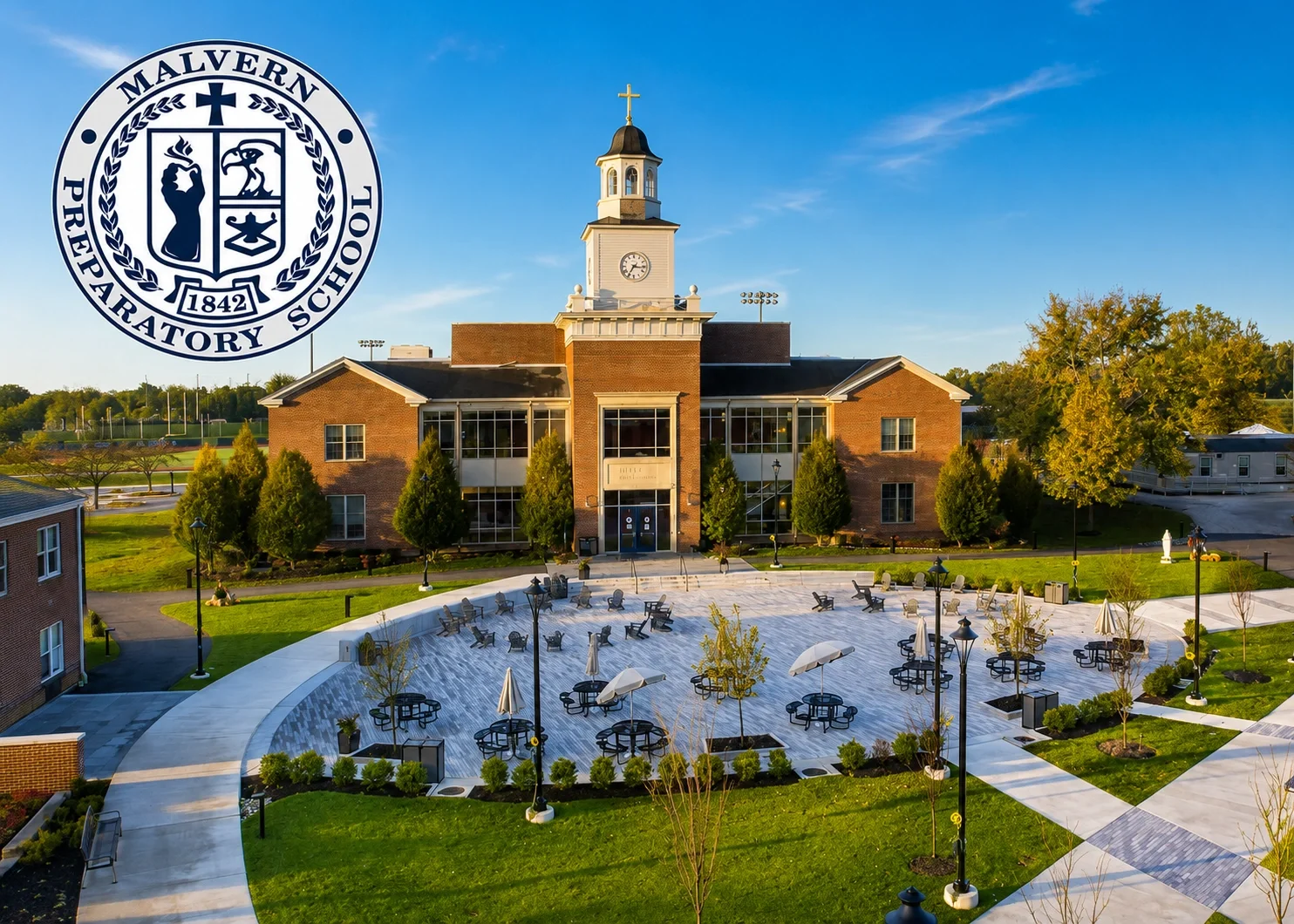
Malvern Preparatory School (Malvern) — Boys' 6–12, Augustinian Catholic, strong academics and athletics.
The Phelps School (Malvern) — College-prep boarding and day school for boys.
Waldron Mercy Academy (Merion) — Co-ed K–8.
Friends' Central School (Wynnewood) — Quaker co-ed K–12, nationally recognized liberal arts approach.
The proximity to these schools makes certain Main Line addresses specifically attractive to families with private education plans — and contributes to price premiums in communities near these campuses.
The Main Line Real Estate Market — 2026 Actual Numbers
The source data below comes from 894 detached home sales closed across the Main Line corridor in 2026. These are MLS transaction records, not estimates.
Total 2026 YTD closed sales: 894 detached homes
Corridor median sale price: $1,212,500
Corridor average sale price: $1,458,356
Price range: $260,000 – $7,150,000
2026 Sales by Price Band
Under $500K: 33 sales (4%)
$500K–$750K: 137 sales (15%)
$750K–$1M: 156 sales (17%)
$1M–$1.5M: 260 sales (29%)
$1.5M–$2M: 128 sales (14%)
$2M+: 180 sales (20%)
The 2026 data makes one thing clear: the Main Line is a corridor where the dominant price tier is $1M–$1.5M (29% of all sales), with 34% of all sales above $1.5M. Buyers entering this market below $750K are working in a narrow segment — 19% of the corridor — concentrated in specific towns and property types.
2026 Median Sale Price by Town
Gladwyne: $1,945,000 median | 40 sales | range $890K–$7.15M
Villanova: $1,800,000 median | 55 sales | range $862K–$6M
Haverford: $1,725,000 median | 25 sales | range $575K–$4.5M
Devon: $1,570,000 median | 46 sales | range $390K–$6M
Bryn Mawr: $1,430,000 median | 102 sales | range $260K–$5.5M
Merion Station: $1,300,000 median | 26 sales | range $869K–$2.375M
Berwyn: $1,275,000 median | 94 sales | range $475K–$6.2M
Wayne: $1,200,000 median | 166 sales | range $385K–$4.75M
Narberth: $1,110,000 median | 29 sales | range $605K–$2.35M
Ardmore: $975,000 median | 37 sales | range $410K–$3.6M
Malvern: $975,000 median | 164 sales | range $335K–$4.795M
Bala Cynwyd: $960,000 median | 54 sales | range $300K–$1.8M
Paoli: $710,000 median | 51 sales | range $395K–$2.51M
Data sourced from MLS closed sales, 2026 YTD. Contact Josh Wernick — 267-934-5674 — for a Comparative Market Analysis specific to your address or town.
Commuting From the Main Line — Real Times, Honest Picture
The SEPTA Paoli/Thorndale Regional Rail line is the spine of the Main Line — the reason these communities exist and the reason they command premium prices. Here's the honest commute picture:
To Center City Philadelphia — By SEPTA Regional Rail
Bala Cynwyd / Merion (Merion station)18–25 min
Narberth (Narberth station)22–28 min
Wynnewood (Wynnewood station)24–30 min
Ardmore (Ardmore station)26–34 min
Haverford (Haverford station)28–35 min
Bryn Mawr (Bryn Mawr station)30–38 min
Villanova (Villanova station)33–42 min
Wayne (Wayne station)36–44 min
Devon (Devon station)40–50 min
Berwyn (Berwyn station)42–52 min
Paoli (Paoli Transportation Center)47–58 min
Malvern (Malvern station)51–64 min
Note: Times vary by express vs. local service. The Paoli/Thorndale line has both express and local trains. Express trains stop at fewer stations and shave 8–15 minutes off trip times. Check SEPTA.org for current schedules — express train frequency is an important factor in comparing towns.
To Center City Philadelphia — By Car
Most Main Line residents who commute to Center City take the train — not because driving is impossible, but because the Route 30 / I-76 (Schuylkill Expressway) corridor is notoriously unpredictable during peak hours. The train wins on reliability, cost, and mental health. Driving times during off-peak hours: eastern Main Line 20–30 min, core Main Line 30–45 min, western Main Line 40–60 min. During peak hours, add 30–45 minutes to all of these.
To King of Prussia and the Route 202 Corridor
Paoli and Malvern are well-positioned for KOP access (15–25 min). Wayne and Devon are 20–30 min to KOP. The eastern Main Line (Ardmore, Narberth) is 30–40 min to KOP by car. The Main Line is a viable choice for KOP-area employment, especially from the western towns.
Parking at SEPTA Stations
Parking situations vary significantly by station and have gotten more competitive. Narberth, Ardmore, Bryn Mawr, and Wayne stations have limited parking that fills early. Wayne and Paoli have the most parking infrastructure. If daily train commuting is central to your plan, I always check the specific parking situation at your station options before we narrow towns.
Is the Main Line Actually Right for You? An Honest Assessment
Not everyone who searches "Main Line homes" should be buying on the Main Line. Some people should be in Chestnut Hill. Some should be in Bucks County. Some should still be in the city. I'd rather tell you that before you spend six months touring homes that don't fit your life.
The Main Line is a genuinely excellent fit if:
You commute to Center City Philadelphia by train 3–5 days a week and want to do it without a car. You have school-age children and school quality is a top priority — not just acceptable schools, but genuinely exceptional ones. You value architectural character and the ability to buy a home that has aged beautifully, rather than everything being brand-new. You want a community identity that has been stable for decades — not a neighborhood that was cornfields five years ago. You're moving from New York or another major metro and want the lifestyle quality and density of culture you're used to, in a suburban package. You understand that property taxes on the Main Line are high and you've calculated that what those taxes buy — the schools, the infrastructure, the community amenities — is worth it for your life.
You might be happier elsewhere if:
Your budget tops out at $500,000 and you want a single-family home with a real yard. Most of the Main Line will be a frustrating search at that price — townhomes and condos are accessible, but detached homes with meaningful outdoor space are largely above $600,000 in most communities. Bucks County or northern Montgomery County offer significantly more home per dollar with comparable school quality. Your job is entirely remote and the commute advantage of the Main Line doesn't factor in. In that case, the same money in Bucks County or the western Philadelphia suburbs might buy you more character and more space without the Main Line tax premium. You want new construction. Most Main Line homes were built between 1900 and 1970. Excellent quality, great bones, genuine character — but old plumbing, old electrical, older systems. If you want everything brand-new, the Main Line is a difficult fit.
I have hyperlocal knowledge of Chestnut Hill, Bucks County, and Montgomery County as well — and I'll tell you honestly which geography fits your situation best, even if the answer isn't the Main Line.
Is the Main Line Actually Right for You?
Not everyone who searches "Main Line homes" should be buying on the Main Line. I'd rather tell you that before you spend six months touring homes that don't fit your life.
The Main Line is a genuinely excellent fit if:
You commute to Center City by train 3–5 days a week and want to do it without a car
You have school-age children and school quality is a top priority — not just acceptable schools, but genuinely exceptional ones
You value architectural character and the ability to buy a home that has aged beautifully, rather than everything being brand-new
You want a community identity that has been stable for decades — not a neighborhood that was cornfields five years ago
You're moving from New York or another major metro and want the lifestyle quality and cultural density you're used to, in a suburban package
You understand that property taxes on the Main Line are high and you've calculated that what those taxes buy — the schools, the infrastructure, the community amenities — is worth it for your life
You might be happier elsewhere if:
Your budget tops out at $500,000 and you want a single-family home with a real yard. Only 4% of 2026 Main Line detached sales came in under $500K. The math is not in your favor. Bucks County or northern Montgomery County offer significantly more home per dollar with comparable school quality.
Your job is entirely remote and the commute advantage doesn't factor in. The same money in Bucks County or the western Philadelphia suburbs might buy you more character and more space without the Main Line tax premium.
You want new construction. Most Main Line homes were built between 1900 and 1970. Excellent quality, great bones, genuine character — but old plumbing, old electrical, older systems. If you want everything brand-new, the Main Line is a difficult fit.
I have hyperlocal knowledge of Chestnut Hill, Bucks County, and Montgomery County as well — and I'll tell you honestly which geography fits your situation best, even if the answer isn't the Main Line.
Selling Your Main Line Home — What the Market Requires
The Main Line is not a market where you can list at any price and wait for the number to find you. It's a market where preparation, accurate pricing, and presentation quality directly determine whether you get the result you want — or watch your home sit while correctly priced competition sells around it.
What separates successful Main Line listings from ones that sit:
Price from day one. The Main Line buyer is financially sophisticated. They're comparing your home to everything else in the corridor and they know the data. An overpriced listing on the Main Line doesn't just sit — it accumulates days on market that signal to future buyers that something was wrong. Getting the price right at launch is the single most important decision in a Main Line sale. My PSA (Pricing Strategy Advisor) certification means I build defensible, data-driven pricing from real comps — not optimism or what you need to net.
Presentation that honors the home's character. Main Line homes sell their history as much as their square footage. Professional photography that captures the stonework, the mature trees, the architectural details — not just the interior square footage — is what stops buyers scrolling at 10pm and makes them schedule a showing. The marketing narrative matters: the walk to the station, the yard where the dog runs, the kitchen where the dinner party happens. I build listings that tell the story, not just recite the specs.
Targeted outreach to the right buyer pool. Main Line buyers are coming from Center City, from New York, from corporate relocation programs, from within the corridor upsizing. I reach all of these pools with specific strategy — not just MLS and hope. That includes direct outreach to buyer's agents with active clients in your community and digital advertising targeted to buyers searching your school district and price tier.
→ Full seller guide → · What is my Main Line home worth right now? →
Your Main Line Real Estate Guide
I'm Josh Wernick — REALTOR® and Certified Pricing Strategy Advisor (PSA) at Keller Williams. I work the Main Line as part of a broader southeastern PA practice that covers Bucks County, Montgomery County, and Chestnut Hill. I hold the LHC (Luxury Homes Certified) designation — relevant for a significant portion of the Main Line market — and the RENE (Real Estate Negotiation Expert) credential for competitive offer situations in fast-moving markets. I am also a certified Residential Real Estate Divorce Specialist for couples who are dividing their Main Line marital assets and need an impartial REALTOR.
Every buyer I work with gets my direct number and uses it. No teams. No assistants. You deal with me. 267-934-5674
Explore Every Main Line Community
Each page below has current homes for sale, market data, school information, and neighborhood character for that specific town:
Bryn Mawr — LMSD/Radnor SD, Lancaster Avenue culture, Bryn Mawr College · $550K–$950K
Villanova — LMSD/Radnor SD, elite estates, Villanova University · $900K–$2M+
Wayne — Radnor SD, best Main Line downtown, walkable, strong community · $750K–$1.5M+
Devon — Tredyffrin-Easttown SD, more space, excellent schools · $650K–$1.2M
Berwyn — Tredyffrin-Easttown SD, residential character, TE district value · $640K–$1.1M
Paoli — TE/Great Valley SD, train hub, accessible western Main Line · $550K–$900K
Malvern — Great Valley SD, thriving main street, corporate access, value play · $500K–$850K
Lower Merion / Ardmore / Narberth — LMSD, walkable boroughs, eastern Main Line · $650K–$1.1M
Chestnut Hill — Not technically Main Line but comparable character · $600K–$1.5M+
Also serves: Haverford · Gladwyne · Wynnewood · Bala Cynwyd · Merion · Radnor · Rosemont · Strafford · Frazer
→ Full Montgomery County buyer guide →
→ Bucks + Montgomery County comparison →
→ First-time homebuyer guide →
"Josh is incredibly dedicated and hard working. I would highly recommend him to anyone looking to buy or sell."
— Erin W. ⭐⭐⭐⭐⭐ Google Review
"Josh will go above and beyond to help you in any way he is able! I highly recommend him if you are looking for a real estate agent!!"
— Diane H. ⭐⭐⭐⭐⭐ Google Review
"Josh is the BEST — he'll do everything in his power to get you and your family where you need to be."
— Jessica H. ⭐⭐⭐⭐⭐ Google Review
Questions About Living on the Main Line PA
What is the Main Line PA?
The Philadelphia Main Line is a string of historic, affluent suburbs running northwest from Philadelphia along the SEPTA Paoli/Thorndale Regional Rail corridor — originally built along the Pennsylvania Railroad's Main Line of Public Works. The core communities include Bala Cynwyd, Narberth, Wynnewood, Ardmore, Haverford, Bryn Mawr, Gladwyne, Villanova, Radnor, Wayne, Devon, Berwyn, Paoli, and Malvern. The Main Line is known for historic stone architecture, top-ranked public school districts (Lower Merion, Radnor, Tredyffrin-Easttown), SEPTA Regional Rail access to Center City Philadelphia, and a cultural density of colleges, restaurants, and community institutions unusual for a suburban corridor. In 2026, 894 detached homes sold across the corridor with a median price of $1,212,500.
How much do homes cost on the Main Line PA?
Based on 894 detached home sales closed in 2026, the corridor-wide median sale price is $1,212,500 and the average is $1,458,356. The breakdown by town: Gladwyne $1,945,000 median; Villanova $1,800,000; Haverford $1,725,000; Devon $1,570,000; Bryn Mawr $1,430,000; Merion Station $1,300,000; Berwyn $1,275,000; Wayne $1,200,000; Narberth $1,110,000; Ardmore $975,000; Malvern $975,000; Bala Cynwyd $960,000; Paoli $710,000. These are 2026 closed sales from MLS transaction records.
What are the best school districts on the Main Line PA?
Three exceptional school districts serve the Main Line corridor. Lower Merion School District (LMSD) serves the eastern Main Line — Ardmore, Narberth, Haverford, Bala Cynwyd, Gladwyne — consistently ranked top 1–3 in Pennsylvania. Radnor Township School District serves Wayne and Radnor — top 10–15 statewide. Tredyffrin-Easttown School District (TE) serves Devon, Berwyn, and Paoli — consistently top 3–5 in Pennsylvania, with Conestoga High School among nationally recognized institutions. School district boundaries are complex — always verify the specific district for any specific address.
How long is the commute from the Main Line to Philadelphia?
SEPTA Paoli/Thorndale Regional Rail times to Center City Philadelphia range from 18–25 minutes from Merion/Bala Cynwyd to 51–64 minutes from Malvern. Narberth and Ardmore run 22–34 minutes. Wayne is approximately 36–44 minutes. Devon and Berwyn are 40–52 minutes. Paoli is 47–58 minutes by Regional Rail plus 38–45 minutes by Amtrak Keystone. Express trains reduce times by 8–15 minutes. Most Main Line professionals take the train to Center City — the Schuylkill Expressway adds 30–45 minutes during peak hours.
What is the best town on the Main Line to live in?
Wayne is most frequently cited as the most complete package — walkable downtown, Radnor School District, train access, and a strong community identity (2026 median $1,200,000; 166 sales, the highest volume on the corridor). Narberth is the most beloved small-town community — tight-knit, walkable, highly competitive (2026 median $1,110,000). Ardmore has the most urban-suburban energy (2026 median $975,000). Haverford and Villanova carry the most prestige. Devon and Berwyn offer TE school district quality with more space. Malvern offers the most value — Great Valley SD, thriving downtown, corporate access — at $975,000 median in 2026 with 164 sales.
Are Main Line property taxes high?
Main Line property taxes are among the highest in the Philadelphia region, reflecting exceptional school districts and municipal services. Annual tax bills for a $700,000–$1M home typically range from $10,000–$20,000+ depending on specific municipality and school district. Lower Merion Township (Montgomery County) uses a different assessment system than Radnor and Tredyffrin/Easttown (Chester and Delaware counties) — always verify the actual current tax bill for any specific address rather than estimating from millage rates.
Is the Main Line real estate market competitive?
The Main Line is one of the most persistently competitive real estate markets in the Philadelphia metro region. Structural inventory constraints keep supply tight — longtime homeowners staying in place longer mean fewer quality properties come to market each year. 894 detached homes sold in 2026 across the corridor, with 29% of sales in the $1M–$1.5M tier. Correctly priced move-in-ready homes in LMSD and TE communities sell in 9–14 days, often at or above asking price. Being fully pre-approved before shopping is non-negotiable in competitive segments.
What makes the Main Line different from other Philadelphia suburbs?
The Main Line combines things that are nearly impossible to find together anywhere else: three of Pennsylvania's top-5 public school districts within one corridor, SEPTA Regional Rail access to Center City in under 30 minutes from eastern towns, an architectural heritage of stone colonials and Victorian estates that newer suburbs cannot manufacture, and a cultural density of colleges, restaurants, galleries, and community institutions that is unusual for a suburban corridor. The corridor has been on national best-suburbs lists for decades without coming off them. The 2026 data — 894 sales, $1.21M median — reflects sustained demand in a structurally supply-constrained market.
Ready to Start Your Main Line Search?
The best next move is a conversation — 20 minutes where you tell me your commute destination, your school priorities, your budget, and what you're hoping to feel in your next home. In return, I'll tell you which 2–3 Main Line communities actually fit that picture, what you're competing with at your price point, and what a realistic search looks like from here.
Text or call 267-934-5674 — or use the contact form below if you prefer to start there.


Take a tour of the entire Main Line with Me!
